
26 November 2026
There has been a lot of talk about the government’s defence strategy; however, there are major shortcomings.
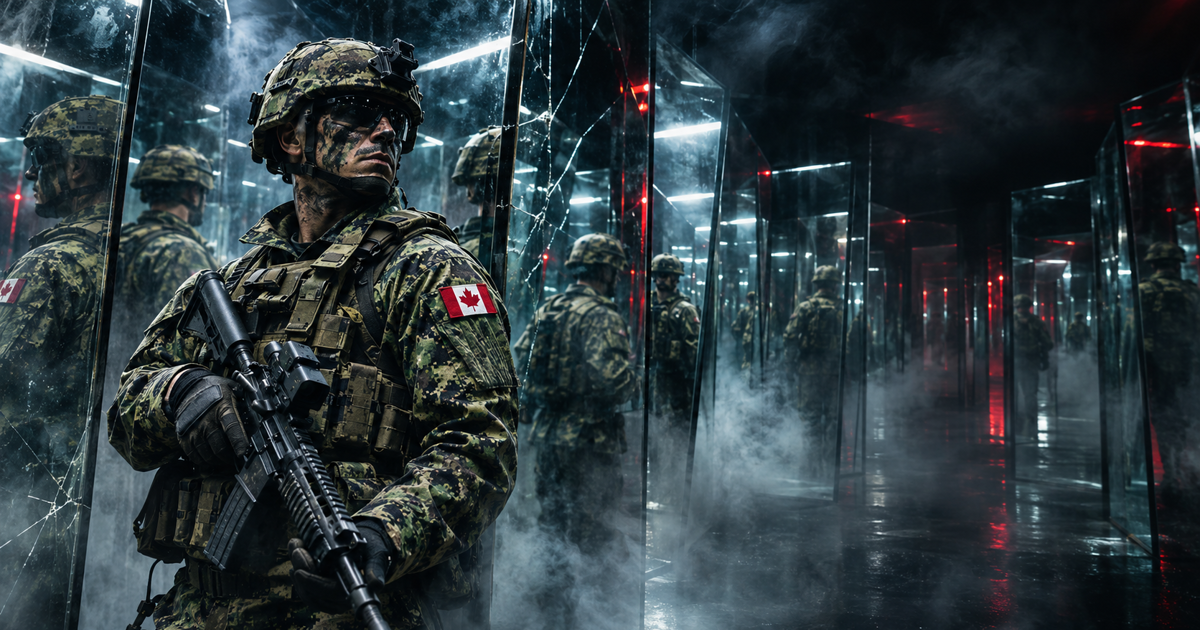
Here is an issue-by-issue breakdown of my criticisms of the government’s approach to defence policy, military procurement, force development, operational readiness, and long-term defence expenditures, and why I say it is woefully inadequate, lacking meaningful depth and, in many respects, just smoke and mirrors.
1. Defence spending and long-term financial commitments
- Absence of a fully costed long-term spending plan. Despite committing to NATO’s 2035 spending targets, the government has faced criticism for failing to provide a detailed financial roadmap.
- Substantial unfunded future commitments. The Parliamentary Budget Officer estimates that achieving the 3.5% core defence spending target will require approximately $33.5 billion in additional annual cash expenditure, on average, over ten years.
- Expenditure targets rather than capability targets. Percentage-of-GDP commitments measure financial inputs rather than military effectiveness, deployability, combat power or operational readiness.
- Institutional capacity to absorb increased expenditure. DND has historically struggled to spend its allocated capital budgets. Increasing appropriations does not resolve the administrative and industrial constraints responsible for underspending. I have yet to see a real plan to address this.
Parliamentary Budget Officer, February 2026; House of Commons Standing Committee on National Defence.
2. Defence procurement and the Defence Investment Agency
- Another layer of bureaucracy. The Defence Investment Agency (DIA) will add another institutional actor to an already fragmented procurement system unless existing responsibilities and approval processes are genuinely consolidated.
- Unclear division of institutional authority. Responsibilities have historically been distributed across DND, PSPC, ISED, and Treasury Board, each operating under different institutional priorities. I have yet to see a meaningful plan to address this.
- Competing definitions of procurement success. Military capability, industrial development, regional economic benefits, procedural fairness, and financial risk management compete with one another and go largely unacknowledged. I don’t see a meaningful plan to address that.
- Insufficient prioritization of operational requirements. The government’s emphasis on domestic employment and industrial development raises serious concerns about whether military requirements will actually take precedence.
- Persistent institutional risk aversion. Changing organizational structures will not necessarily change the public service’s approach to risk, accountability and decision-making.
- Shortage of qualified procurement personnel. Accelerating procurement requires experienced project managers, engineers, contracting specialists and military requirements personnel, not simply additional money.
- Excessive documentation and approval requirements. A federal audit reported in April 2026 found that significant procedural obstacles persisted and, again, went largely unacknowledged, without a real path to address them.
- Inadequate emergency procurement mechanisms. Even acquisitions designated as urgent operational requirements face lengthy approval and acquisition processes.
- Failure to keep pace with technological development. Traditional acquisition cycles remain poorly suited to rapidly evolving technologies such as drones, electronic warfare, artificial intelligence and cyber capabilities.
- Insufficient attention to through-life sustainment. Purchasing equipment is only one component of capability development; maintenance, ammunition, spare parts, infrastructure, training and upgrades must also be funded. We need the people behind all that.
The Office of the Procurement Ombudsman’s June 2026 report identifies these concerns.
Important additional shortcomings in Budget 2026
The November 2026 budget provides further grounds for criticism, particularly concerning the period after 2030.
- Defence spending projections end in 2030, despite NATO commitments extending to 2035.
- Core military expenditure is projected to reach 2.6% of GDP, approximately $99 billion, by 2030.
- The PBO estimates that reaching 3.5% would require core expenditure of approximately $163.6 billion by 2035.
- Several proposed major acquisitions, including submarines, airborne early warning aircraft and a potential (and woefully misguided) mixed fighter fleet, lack separately identified funding in the budget.
- Budget 2026 contains only $755 million in newly allocated defence funding over five years, notwithstanding the much larger commitments announced previously.
- Former parliamentary budget officer Kevin Page has criticized the lack of transparency surrounding post-2030 expenditure.
And yes, the government’s counterargument is that detailed projections out to 2035 would be obsolete given technological change and the evolving nature of warfare…which is true, but begs obvious questions about what they have put down.
3. Absence of a sufficiently coherent military strategy
This criticism was raised explicitly by Christian Leuprecht, Robert Huebert and Richard Shimooka (whom I correspond with) before the Standing Committee on National Defence in May 2026.
- Defence industrial policy is not military strategy. Building a domestic defence industry does not, by itself, establish what Canada needs its armed forces to accomplish.
- Insufficient articulation of strategic ends, ways and means. Spending announcements and individual acquisitions need to be connected to clearly defined strategic objectives and operational requirements.
- Lack of clarity concerning Canada’s future military posture. What balance is Canada seeking between continental defence, expeditionary warfare, Arctic sovereignty and NATO collective defence?
- Potential mismatch between geopolitical urgency and procurement timelines. Huebert has questioned whether the international security environment gives Canada enough time to develop its domestic industrial capacity before it needs the resulting military capabilities.
- Insufficient emphasis on warfighting capability. Defence expenditure can fulfil economic, diplomatic and alliance objectives without necessarily producing forces capable of sustained high-intensity warfare.
- Unclear strategic trade-offs. A coherent strategy must establish not only what Canada intends to do militarily, but also what it is prepared to forgo.
4. Future force structure and operational readiness
DND’s own 2025–26 Departmental Results Report, published on 24 November 2026, acknowledges equipment, personnel and readiness problems across all three services. Something that is regularly confirmed by my own contacts in the forces, including an MCpl on the front lines of a training cadre.
- The gap between nominal and effective military strength. The number of personnel and platforms on paper does not reflect the forces available for operations.
- Continuing equipment serviceability problems. Aging fleets, maintenance requirements, supply-chain disruptions and personnel shortages (which the government is actively inflaming through policy choices) continue to restrict operational availability.
- Lengthy readiness recovery timelines. Revised long-term equipment readiness targets extend to 2036.
- Risk of transitional capability gaps. Existing equipment is likely to exceed end of its service life before replacement systems become fully operational.
- Insufficient capacity to sustain concurrent operations. Domestic emergencies, continental defence and overseas deployments compete for limited resources.
- Sustainability of high operational tempo. Existing commitments compound maintenance backlogs, personnel exhaustion and retention difficulties.
- Force generation versus force employment. The CAF must simultaneously rebuild its personnel strength, train new recruits and sustain existing operational commitments.
- Risk of a hollow force. Acquiring sophisticated platforms without sufficient crews, technicians, ammunition and logistical support can produce impressive inventories but limited usable combat power.
- Unclear relationship between future force size and assigned missions. Recruitment and expansion targets require an accompanying operational rationale and realistic force-generation model.
5. Personnel, recruitment and retention
- Recruitment announcements versus trained effective strength. Increasing applications and enrolment does not automatically translate into additional deployable personnel.
- Insufficient training capacity. Rapid expansion is overwhelming training establishments and diverting experienced personnel from operational units.
- Shortages in critical military occupations. Pilots, technicians, engineers, and other specialists cannot be produced quickly, regardless of available funding.
- Excessively lengthy recruitment processes. The October 2025 Auditor General’s report found that median recruitment times ranged from 245 to 271 days, against a target of 100–150 days.
- Failure to capitalize on existing recruitment interest. Between April 2022 and March 2025, approximately 192,000 people applied to join the CAF, but only around 15,000 were recruited.
Why? Because we have not put sufficient effort into building up training capacity – in fact, we are actively removing occupation requirements to fast-track recruits through so that on paper we can claim we have numbers. What good is saying you have X number of new infantry if they haven’t taken their basic machine gunner course because it has been punted downstream or eliminated.
- Retention versus recruitment. Recruiting additional junior personnel cannot immediately compensate for the loss of experienced officers, senior NCOs, and technical specialists.
- Military housing and quality of life. Pay increases must be accompanied by improvements in housing availability, healthcare, geographic mobility and family support. Retention is shit for this, along with the wait time for occupation training opportunities because money is funnelled into procurement and basic quals.
- Uncertain scalability of the Reserve Force. Expansion requires credible training, equipment, leadership, mobilization and administration arrangements.
Flat out, even a basic 5-minute conversation with any MCpl in the reserves will show this isn’t the case; a lack of awareness suggests someone so ill-informed and unserious about the subject that they don’t warrant engagement.
- Competition for skilled labour. The simultaneous expansion of the CAF and Canada’s defence industrial sector risks intensifying competition for the same limited pool of technically qualified personnel. No serious plan to address this exists.
The recruitment audit principally covers the period before Carney took office. It establishes the scale of the inherited problem against which the government’s reforms should be assessed. Although I understand why, I don’t think this is really the issue so much as how much progress you are making now and at what speed. The government reports that recruitment has reached its highest level in three decades. Terrific, also pretty dishonest when one factors in training delays and retention failures.
6. The F-35 review and future of the RCAF
- Reopening the procurement process. The review of Canada acquiring 88 F-35s (not my first choice) adds uncertainty to a programme that has already experienced inexcusable delays.
- Politicization of fighter procurement. Trade disputes with DC and domestic industrial considerations are now competing influences with necessary (and lacking) operational requirements. I don’t see this being taken seriously.
- Questionable economics of a mixed fighter fleet. Operating both F-35s and Gripens would require separate training, maintenance, engineering and logistical arrangements. That this is even being discussed shows how unserious and unqualified the minds at the helm are.
- Personnel implications of a mixed fleet. The RCAF already faces shortages of qualified pilots and technical personnel.
- NORAD and allied interoperability concerns. American officials have raised (legitimate and, to be fair, in some cases, US-created) concerns about the implications of the fighter review for continental defence cooperation.
- Significant existing cost escalation. The Auditor General identified an increase in estimated F-35 project costs from $19 billion in 2022 to $27.7 billion in 2024, excluding at least $5.5 billion in additional requirements.
- Infrastructure deficiencies. Key fighter facilities are projected to be completed in 2031, three years behind schedule.
- Risk of a fighter capability gap. Further uncertainty surrounding the replacement programme compounds the challenges associated with maintaining the aging CF-18 fleet.
- Sovereignty versus operational autonomy. Diversifying aircraft suppliers does not necessarily eliminate foreign dependencies; it may instead create additional ones.
The rationale for the government’s review includes reducing strategic dependence on the United States and securing greater domestic industrial benefits. That’s a pipe dream, frankly. Although they could normally be seen as legitimate policy objectives, their feasibility in the Canadian context strongly suggests otherwise. Moreover, the implications for cost, readiness and combat effectiveness, not to mention how long this will all take, require serious questioning.
7. The Navy
The concerns surrounding naval procurement include the following. Some are longstanding; others are prospective risks associated with the current government’s plan (in this case, current government would mean Liberal – both Trudeau and Carney, but to be fair it started under Harper).
- Capability gap. Maintaining aging Halifax-class frigates until the River-class destroyers become operational.
This started under Harper, but these should already be in the water, and the Halifaxes are past end of life. The Government seems totally fine with ignoring that and is not making the decisions needed to get ships in the water. The result is we might not have ships, full stop. This should never have happened and could still be corrected, but it won’t for political reasons. Instead of boutique made in Canada, real leadership would tell Canadians we need to buy off the shelf because we punted this down the road too long, and we don’t have the luxury of creating (unsustainable) jobs out of this
- Insufficient naval personnel. Manning existing vessels while simultaneously training to crew an expanded and technologically more sophisticated fleet is not possible right now. It will require sending our sailors abroad, likely to the US for training. I am a former MARS / Naval Warfare Officer.
- Implications of submarine procurement. The proposed acquisition of up to 12 submarines represents an enormous capital and long-term operating commitment.
- Submariners. Moving from four submarines to a potentially much larger fleet requires substantial expansion of training, maintenance and support establishments.
- Domestic shipbuilding limitations. As alluded to above, we are failing to balance current and future maintenance of sovereign industrial capacity with affordability and timely delivery.
- Maintenance infrastructure. Ensuring that fleet expansion is matched by adequate dockyard and maintenance capacity on both coasts. The scale is simply not there in any plan.
- Competing maritime responsibilities. I see no plan to reconcile commitments in the Atlantic, Pacific, Arctic and European theatres.
- Integration of CCG into DND. Questions remain about institutional responsibilities, operational command, and the distinction between civilian maritime services and military capability. This was about adding bulk to the military on paper; let’s be honest, this is an accounting trick.
DND’s own reporting acknowledges limitations in fleet availability, personnel availability and submarine readiness. Budget 2026 leaves the proposed submarine acquisition without a separately identified funding allocation.
8. Canadian Army and land warfare
The government’s wider modernization commitments need to be assessed against specific force-development requirements.
- Lack of clarity regarding the future of the Army. What type, size and number of formations is Canada ultimately intending to field?
- Capacity to sustain brigade-level operations. How are they actually planning to maintain a substantial overseas deployment while rebuilding domestic force-generation capacity?
- Ground-based air defence requirements. There is an urgent need for an updated and comprehensive protection plan against new aerial threats; I don’t see it.
- Long-range precision fire. The requirement to develop capabilities consistent with contemporary high-intensity warfare are objectively lacking.
- Ammunition stocks and production capacity. We are nowhere near ensuring sufficient reserves for sustained operations rather than peacetime training alone…even training has become an issue.
- Drone / counter-drone and Electronic warfare. I don’t see “the next sentence” after investment. Translating investment announcements into widely distributed operational capability that ensures formations can operate effectively in these contested environments is not being articulated.
- Logistical depth. I don’t see a plan to develop sufficient transport, engineering, maintenance, medical and supply capabilities to sustain larger formations.
- Heavy equipment. Ensure the Army has sufficient serviceable armoured vehicles, tanks, and artillery to equip operational and training formations concurrently. It’s not enough to simply say we are spending more money or plan to order this from Roshel; prove to us that it is actually possible in a reasonable time. Again, I do not see it. Also wonder how we do that as we pivot away from the US; the bloody plant in Brampton will up-armour US-made GMC trucks.
The government has committed $2.3 billion to its Defence Drone Initiative and $7.6 billion to supporting the deployment in Latvia, which is expected to expand to 2,600 personnel. The outstanding question is how these commitments be possible with the current Army force development strategy?
9. Arctic sovereignty and continental defence
- Distinction between Arctic presence and Arctic defence. Surveillance, patrols and demonstrations of sovereignty are not equivalent to the ability to conduct sustained military operations in the Arctic. What are we doing there? What is the plan? Where will we operate from? These are all superficial claims without any concrete plan for how to get there.
- Insufficient northern logistical infrastructure. Airfields, ports, fuel storage, communications, maintenance facilities and accommodation are necessary to support a credible permanent or rapidly deployable military presence. We don’t have it, and we have no serious plan to develop it at the scale needed; nor is there the political will to do so.
- Dependence on American military capabilities. Canada’s ability to exercise greater strategic autonomy remains constrained by its dependence on American intelligence, surveillance and continental defence architecture. That’s not going to change.
- NORAD modernization timelines. Long-term infrastructure and sensor investments may leave vulnerabilities in the intervening years.
- Integrated air and missile defence. The need to clarify Canada’s future role in defending North America against emerging aerial and missile threats.
- Undersea surveillance and defence. The requirement for credible monitoring and protection of Canada’s northern maritime approaches.
- Reconciling Arctic and expeditionary requirements. Equipment and force structures suitable for European operations would not meet Canadian Arctic requirements. So that means twice more what we have.. like the US does. Where is the acknowledgement, and where is the detailed plan?
- Tension between Canadian strategic autonomy and continental integration. Reducing dependence on Washington while maintaining an effective integrated continental defence system really isn’t possible.
10. Defence Industrial Strategy and economic nationalism
- The subordination of military requirements to economic policy. (the same as always) Defence procurement in Canada remains a political instrument of economic stimulus, regional development and industrial protection. That puts it in conflict with the best military decisions.
- Buy Canadian v. buy the best available. Domestic sourcing requirements conflict with operational suitability, affordability or delivery schedules.
- Limited domestic economies of scale. Canada’s relatively small military does not generate sufficient demand to sustain certain domestic production lines economically. We know this, and we’re pretending otherwise while we spend more, wait longer, and get less.
- Duplicating existing allied industrial capabilities. Developing sovereign production capacity in every sector is inefficient, expensive, and impractical.
- Industrial development timelines. Establishing new manufacturing capacity takes far longer than acquiring mature systems from allied suppliers.
- Strategic autonomy versus autarky. Complete industrial self-sufficiency is unrealistic for a military of Canada’s size. Full stop.
- Continued foreign technological dependencies. Domestic assembly does not necessarily confer control over intellectual property, software, critical components or export permissions. Smoke and mirrors: made in Canada doesn’t mean Canadian anyway.
- Risk of permanent industrial subsidies. Domestic defence firms would require ongoing financial support, as Canadian orders would not be enough and export markets are unlikely to materialize. Everyone else is doing this and better at it, as well as being more mature.
- Trade-off between economic sovereignty and military interoperability. Diversifying suppliers improves resilience but also increases logistical and technical complexity at a time when war is coming, and we need simplicity, integration (both industrial and military) and interoperability.
- Measuring success through economic indicators. Jobs created, contracts awarded and industrial investment are irrelevant to measuring military capability delivered.
On this last point, the February 2026 Defence Industrial Strategy explicitly seeks to combine economic development, military modernization and strategic autonomy. The Office of the Procurement Ombudsman has identified the need for clearer principles governing trade-offs among procurement objectives. More smoke and mirrors.
11. Alliance commitments and international credibility
- Growing tensions with the United States over defence cooperation. American officials have publicly questioned Canada’s military readiness, procurement decisions and expenditure projections. As they have behind closed doors for years. We’re getting offended about it, and instead of recognizing these are very legitimate criticisms from a country that knows a hell of a lot about this stuff, we respond, “we’re spending more, you’re just being a dick.” There is a hell of a lot more to it than spending. The US is aware of what we are doing and not doing, and that gets processed by the institutional architecture and filtered down to simplistic public messages, but there is more (very legitimate) depth to their criticisms (like what I have given above) that never make it to the front page but are what these silly tweets, etc. are rooted in.
- Suspension of bilateral defence consultations. Washington’s suspension of meetings of the longstanding joint military advisory body represents a deterioration in institutional cooperation rooted in their dissatisfaction over our new plan and its pretend progress; it’s that simple. They don’t know how else to get the message across at this point since we seem hell-bent on carrying on as before.
- The commitments exceed available military resources. Canada is seeking to expand its contributions to European security while simultaneously rebuilding its forces and strengthening continental defence, and is being unserious about how the hell it plans to do that. Everyone knows with current strategies it’s not possible, and we should not be surprised when someone calls us out on our bullshit.
- Uncertain Indo-Pacific military posture. We are all over the place here. Sustaining a meaningful presence in the region while meeting increased Atlantic, Arctic and European commitments is an impossible objective with current policies. Doing this while also increasing engagement with China …what would you think if you were the US or, say, Taiwan, Korea, or Japan? Come on.
- Alliance credibility is based on operational contributions, not expenditure alone. Meeting NATO financial benchmarks doesn’t mean anything if we can’t show Canada can meaningfully contribute militarily during a major conflict. And that means more than adding a frigate to a carrier group, which is actually more of a pain in the ass for allies than an aid. We need to show actual sustainable independent capacity that is interoperable within the larger system.
- Conflation of procurement diversification with strategic independence. Purchasing European equipment does not automatically compensate for diminished continental defence cooperation.
The overarching policy question
A recurring theme in criticisms levelled against the Government is the distinction between three separate undertakings:
- A defence spending strategy, determining how much money Canada will spend.
- A defence industrial strategy, determining where and how Canada will spend that money.
- A military strategy, determining what Canada needs its armed forces to accomplish and how they will accomplish it.
The first two do not constitute the third.
Yes, Carney has demonstrably increased defence spending, but is still well way from current NATO targets and wants 10 years to meet it, which is unreasonable. Furthermore, there are the deeper questions about initiating rather substantial institutional reforms. The question is not spending but how that will translate into a coherent, adequately resourced and sustainable military capability within the timeframe demanded by the international security environment.
My conclusions after 20+ years of doing this:
Woefully inadequate and largely smoke and mirrors. From where I am sitting, this is a government “managing” the problem instead of addressing it – in classical Canadian politics fashion. The root of the problem is that the conversation, as well as the problem itself, is being handled by professional staffers and talking heads with insufficient or inappropriate educational and experience backgrounds to even recognize the institutional depth of the problem. To paraphrase recent conversations I have had with both Vice Admiral Paul Maddison and Colonel Bernd Horn on this subject … war is coming, and Canada is fucked.
Featured Photo: “Canadian Soldier in Smoke and Hall of Mirrors” – ChatGPT