


27 March 2026
The United States deployed two US Navy Amphibious Ready Groups and their embarked Marine Expeditionary Units to the Middle East. There are reports that the US will soon deploy elements of the 82nd Airborne Division to the region. This has raised speculation on whether the US will invade Iranian territory. Obviously, a large ground incursion into mainland Iran would be out of the question for such a limited force. However, Iran does have outer islands that would seem to be a feasible target.
Kharg Island
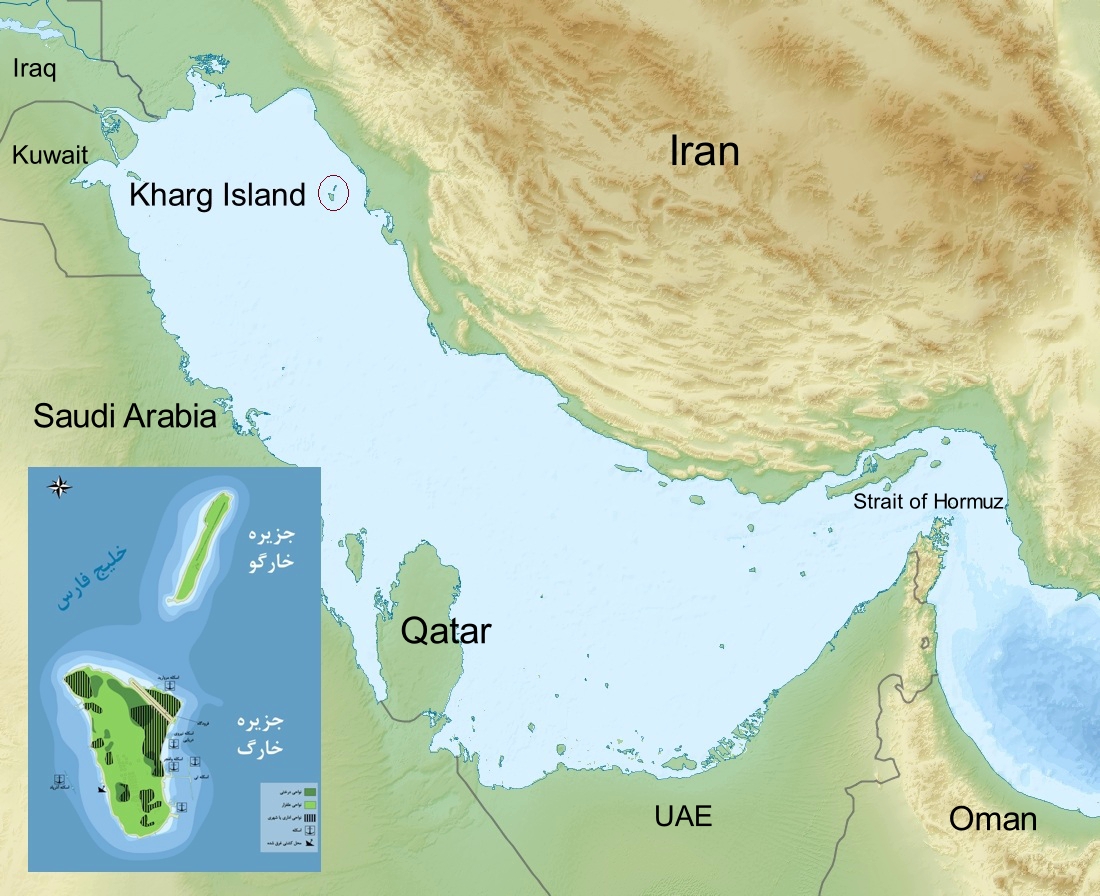
There is one island that has been a focal point – Kharg Island. On 13 March, the United States bombed more than 90 Iranian military sites on Kharg Island. The United States has transferred a Marine Expeditionary Force to the Middle East, and it is believed that up to 3,000 personnel from the 82nd Airborne Division will be deployed to the region. Iran is currently preparing defences on the island, expecting a US ground attack. Iran’s parliamentary speaker issues a warning to Iran’s neighbours if Kharg Island is occupied.
The Importance
Kharg Island is merely a 5-mile strip of coral on the Persian Gulf, but it is a key site for Iran’s oil and gas exports. Kharg handles 90% of Iran’s crude exports. It is a vital site for Iran’s economic health. Despite the blockade of the Strait of Hormuz, Iran continues to export millions of barrels of oil.
Despite the rhetoric, traffic continues to traverse the Strait of Hormuz, albeit at a minute fraction of what it used to. Fuel tankers, not associated with the US or Israel, are travelling along the Iranian coastline. Many of the tankers are destined for India, but Iran recently extended a conditional passage provision to South Korea, which South Korea rejected.
It is estimated that since 28 February, when the war began, to mid-March, Iran has exported 12 to 13.7 million barrels of oil. In the same amount of time last year, Iran shipped approximately 1.69 million barrels per day. Even at the lowest estimate, it would mean a 20% decrease in Iranian energy exports.
There are other transfer stations, including Jask Terminal (Gulf of Oman/outside Hormuz), Lavan Island, Sirri Island, and Bandar Abbas. Iran could attempt to bolster exports with the other stations. Jask Terminal has a capacity of 1 million barrels per day and is located east of the Strait of Hormuz. Lavan and Sirri Islands are within the Persian Gulf. Iran is now imposing a $2 million transit fee for safe passage through the Strait of Hormuz. This is where the maths war begins – how many tankers can Iran service with those two islands, and then extract a safe-passage fee, compared to pre- and current-war oil revenues?
The Risk of Kharg
Kharg Island is in the northern Persian Gulf. Kharg Island is only 25 to 30 kilometres (about 15 to 20 miles or 15 nautical miles) from the Iranian mainland. This means that any US forces will be vulnerable to Iranian drones and missiles. A US occupation force will need anti-air systems to counter these threats. It would also mean that the US Air Force would have to divert assets to help protect US forces on Kharg Island. The US and Israeli Air Forces do have air superiority, but it will mean that assets will have to be diverted from the campaign over Iranian airspace.
The US Navy is in the Arabian Sea, east of the Strait of Hormuz. This means that US forces would need to come from, and be resupplied, from Iraq. This likely would have to be done by air. There is a landing strip on Kharg Island, and it is easy to imagine that this would be a primary target for Iran if the US were to take the island.
The US Navy is not transiting the Strait of Hormuz. During the Iran-Iraq War, the United States Navy attempted to provide tanker escort. This was also during the Cold War, when the US Navy was six times its current size. The USS Samuel B. Roberts, a frigate, hit a sea mine on 14 April 1988. Other ships were fired upon, but this was well before Iran was able to adopt aerial and sea drones and accumulate various missile systems. Today, the US Navy would have to transfer destroyers and smaller ships from other duties and carrier groups to the Middle East due to the fleet’s smaller size. If any of those ships were hit, the operational viability of the US naval fleet would be at risk until new ships are built.
Iranian-backed militias will target US forces in Iraq for retaliatory attacks. And, of course, put US bases in Iraq in greater danger from Iranian missile and drone attacks. According to sources, the US can confirm that it has destroyed one-third of Iran’s missile capacity, with another one-third of its status unknown – either it may be buried and inaccessible or damaged. Long-range Iranian attacks continue to persist throughout the Middle East. Iran targeting Kharg Island could be more viable given that shorter-range missiles and drones will be harder to detect and destroy.
If Iran wants to see global economic pressure on the world and force the United States to suffer the consequences, there is another option for Iran. Iran could target the oil export infrastructure of Kharg Island itself. This would lead to oil prices escalating further and fortify Iran’s policy of energy scorched earth in the Middle East. Although it would have catastrophic repercussions for Iran’s economic recovery after the war.
Taking Kharg Island will put immense pressure on the Iranian regime, but the possible fallout will put immense pressure on the United States and the global economy. The risk of casualties from deployment on a small island very close to the Iranian coastline. And increased oil prices as Iran’s main oil export facility being destroyed to inflict a deep wound to the global economy.
As the US Air Force would put it, there has been a lot of “Warhead on Foreheads”, meaning that a lot of Iran’s military capacity has been taken out through US and Israeli air strikes. However, there has been a lack of strategic wins for the Trump administration.
This makes Kharg Island a tempting target. Seize Iran’s oil export capability and starve the regime of funds, but can also be the undoing of the Trump administration and unleash further economic calamity and casualties.
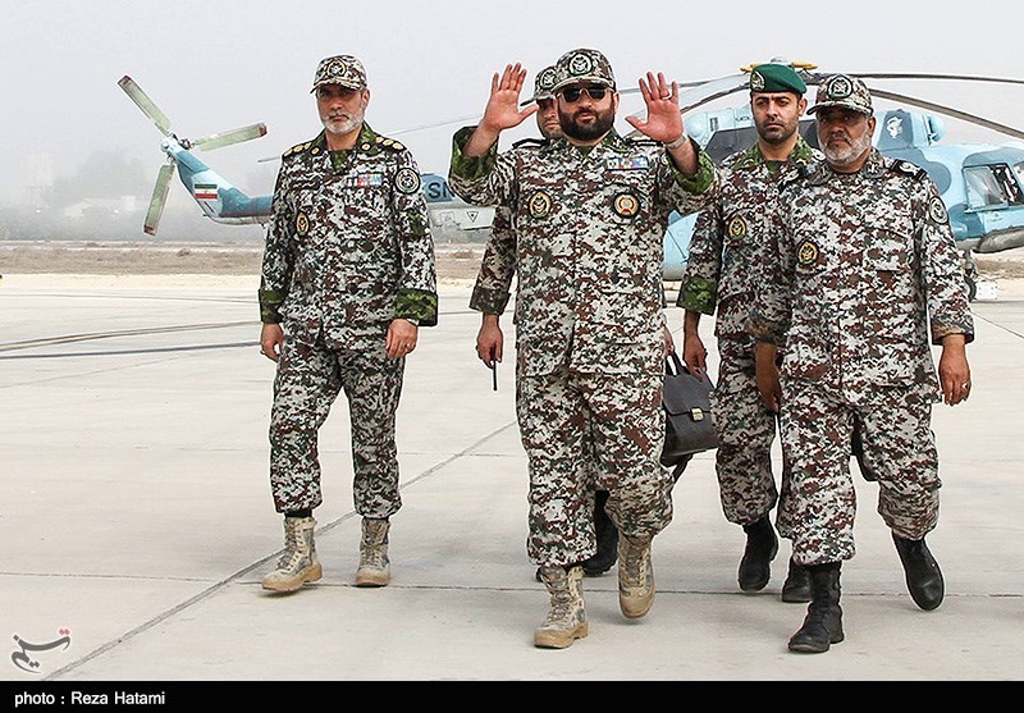
Featured Image: “Deployment of Mersad SAM systems with Shalamcheh missiles on Khark Island” – Tansim News Agency, Wikimedia Commons, 2026
.jpg)
Inset Image: “Map of Persian Gulf and Kharg Island”