


16 December 2025
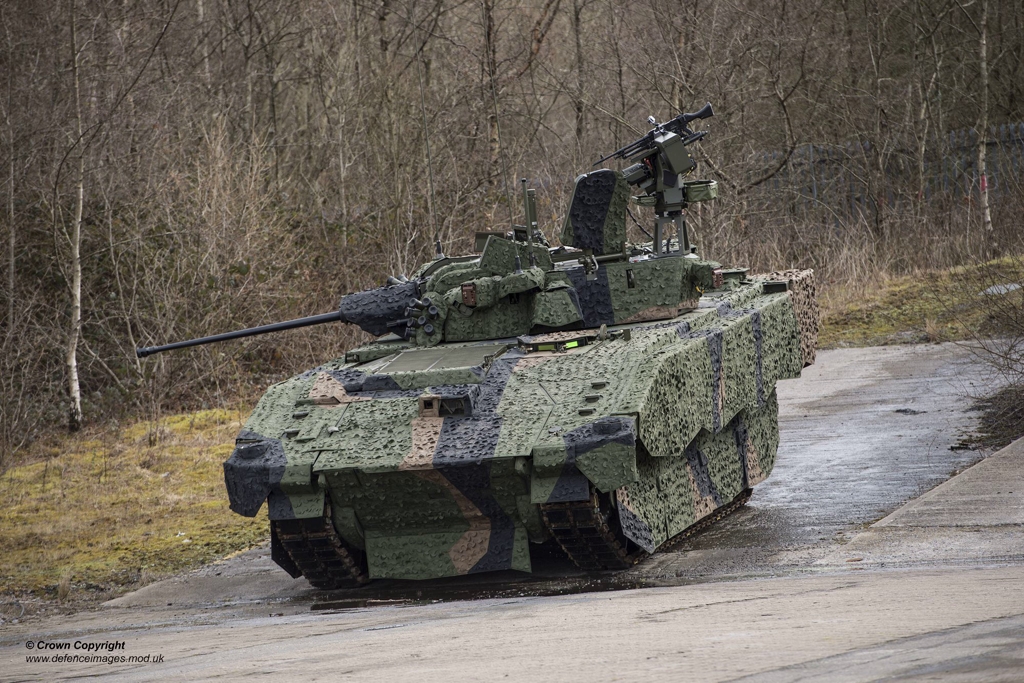
For those classicists, Ajax was notable for his abundant strength and courage, especially in his duels with Hector at the Battle of Troy. He was known as “Ajax the Great”; well, Britain’s Scout Specialist Vehicle is not living up to the name. Now the UK government has to decide what to do with the development and procurement programme.
The UK’s Ajax armoured vehicles have faced yet more issues in recent weeks following a training exercise on Salisbury Plain on 22 November, during which around 30 troops from two regiments fell ill. Symptoms included vomiting and violent shaking, with some soldiers left unable to control their bodies. The exercise was halted within 30 minutes of the first incidents, and reports indicate that there were no hospitalizations and that many returned to duty, though under monitoring.
This caused significant embarrassment for Defence Minister Luke Pollard, who, earlier the same month, had declared that the Ajax project had “left its troubles behind” and was approaching readiness for deployment after overcoming significant challenges.
Later in the House of Commons, Pollard commented that he was disgusted to hear of the injuries, and that he had been previously assured in writing by the Chief of the Defence Staff, General Sir Roly Walker, and then National Armaments Director, Andy Start, that the project was now safe. The project was due to deliver 589 armoured vehicles, with the first entering service in 2017, but has faced numerous delays and produced only 160 vehicles to date. It has been indicated that full operating capacity may not be reached for another four years. Pollard did state, however, that not all of the six variants of the Ajax had faced such problems and that the vehicles had completed “42,000km of testing without such injuries”.
In response to his statement in the Commons, Shadow Defence Secretary James Cartlidge said that the incidents with noise and vibration sounded “strikingly similar” to the problems that he had been assured had been resolved during his tenure as Minister for Defence Procurement. The MoD knew of the Ajax issues and, as part of the “solution,” issued improved seats and ear protection to mitigate the vibration and noise.
One of the issues with the Ajax is that it has been redesigned to meet new and additional requirements. It has faced growing “requirements creep” throughout its development, which occurs when additional systems are added, and the vehicle is redesigned to meet extra demands. It is reminiscent of the development of the American Bradley Fighting Vehicle, which also faced numerous delays and setbacks due to requirements creep.
For the Ajax, its contractor, General Dynamics, has come under increasing criticism, not just for the faults, flaws, and delays associated with the programme, but also for comments made by its own that have appeared to shift the blame away from the company and onto both the crew and command.
An individual who identifies as an Acceptance Manager, and whose employment history includes roles associated with the Ajax, responded to social media posts describing a range of reported faults by stating that, aside from coolant leaks, all other issues were attributable to crew error, poor maintenance, and shortcomings in command decisions. While there is no evidence that this is an official statement of the company, the individual’s association has understandably brought further heat on General Dynamics, which was already facing significant pressure.
Pollard has since announced investigations into the safety of the Ajax armoured vehicles, and has stated that once these are complete, they will make “whatever decisions are required to end this saga one way or another.”
While Defence Secretary John Healey has backed General Sir Roly Walker and has stated that the UK military stands ready, the future of a central feature of that military readiness remains in flux.
With so many questions still unanswered, UK forces stand at a critical juncture. Ministers may face a choice between investing further billions at a time when economic pressure continues to squeeze the government coffers, or cutting their losses and looking elsewhere despite the sunk costs of the project.
General Dynamics was chosen by the UK government in 2010 to provide the next armoured reconnaissance vehicle. It was an unusual selection, as typically there is a demonstrator competition. Whilst the Ajax was chosen, primarily due to the economic incentives of producing the vehicle in the UK. General Dynamics bought a forklift factory in Pentrebach in South Wales.
The question now arises whether the UK should cancel the Ajax procurement and go with another option with General Dynamics to avoid a lawsuit for loss of revenue and contract cancellation. General Dynamics also produces other platforms, including the Light Armoured Vehicle (LAV) family in service with Canada and the United States.
Unfortunately, though, the LAV family is a wheeled vehicle rather than tracked, which makes it less likely to shift to it. But then that would leave Sweden’s BAE Systems Hägglunds with its CV-90 as a potential replacement. The CV-90 was under consideration at the beginning of the procurement, and it is a successful tracked IFV. The government could cancel the Ajax programme and suffer financial loss as General Dynamics would seek compensation for the failed programme and the money it has invested in UK production. At DSEI, General Dynamics touted the Ajax’s ability to fulfil an estimated £10 billion export market.
The Ajax programme will most likely continue. But either way, critical decisions lie ahead for individuals in the Ministry of Defence as the pressures at home and abroad continue to grow.
Featured Photo: “Ajax Scout Specialist Vehicle” – UK MoD Imagery, Flickr, 2025