

16 June 2026
The UK is in the news so much these days one could be forgiven for tuning it out. There is this steady low-grade rumble from the British Isles, which given the state of the things in the West, could easily be dismissed as (the new) ‘normal’ background noise. I would argue this is not the case and the UK is reaching a major turning point. It is facing a political crisis unlike previous affairs in our historical memory. Instead of a single flash point this is a whole of body problem.
In previous articles, social media posts, and the DefRep podcast I have repeatedly referred to a view of the UK shared and given voice by Dr. David Betz at King’s College London. See here and here. The West will likely see some sort of revolt or low-grade civil war in the next 5 years and the prime candidate for this is the UK. I think that if one steps back and looks at the events of the last several months there is a view that we are seeing the shift towards that right now.
The boil really started last month with local elections in the United Kingdom. Held on 7 May 2026, 5,066 English councillors for 136 English local authorities (all 32 London borough councils) were up for election. Most of these seats in England were last up for election in 2022 (two years before Starmer became PM in 2024).
There is some background here to explain the scale. The English Devolution White Paper on 16 December 2024 set out the Labour government’s plans for local government reorganisation, involving the remaining two-tier counties of England being abolished with elections to new unitary authorities. To give you a very brief idea of what resulted, this had led to administrative concerns and Starmer’s Government responded by postponing some of the elections. (including some 2025 elections if I understand correctly).
This move prompted criticism from the Electoral Commission, which questioned the credibility of the reasoning given and said that it caused unprecedented uncertainty. The Commission argued that there was a clear conflict of interest in asking Councils to decide how long it would be before they faced voters.
By February 2026, the government confirmed that 30 of the 63 council elections had been postponed. However, following a legal challenge by Reform UK, which had made major gains in the previous local elections, the government withdrew on 16 February 2026 its plans to delay elections, after receiving legal advice that the delay could be unlawful; all scheduled elections for 2026, along with the delayed elections from 2025, were now to take place.
Come the May elections Labour was defending more than 2,500 seats, the Conservatives over 1,300 and the Liberal Democrats just under 700 in England. The results were a political bloodbath for Labour. With all 136 councils being declared, Reform UK took 1,453 councillor positions, an increase of 1,451 seats. Labour took 1,068 seats, a decrease of 1,496 seats. The Tories took 801 seats, a decrease of 563 seats. The Liberal Democrats took 844 seats, an increase of 155. The Green Party took 587 seats, an increase of 411. Independent-orientated candidates won 212 seats, up 34 seats. The Residents’ Association won 36 seats, a decrease of 31. Labour lost control of 38 councils, Reform UK gained 14 councils, Conservatives lost 6 councils, the Liberal Democrats gained 1 council, Green gained 5 councils, and 23 councils switched to being in a state of no overall control by a political party.
Basically, Reform took almost the entirety of what Labour lost in terms of raw numbers. Beyond that there was a lot of shuffling among the smaller parties, but the Reform win is the key headline to keep in mind for later in the conversation.
Simultaneously, while leading up to these elections there was the Peter Mandelson affair.
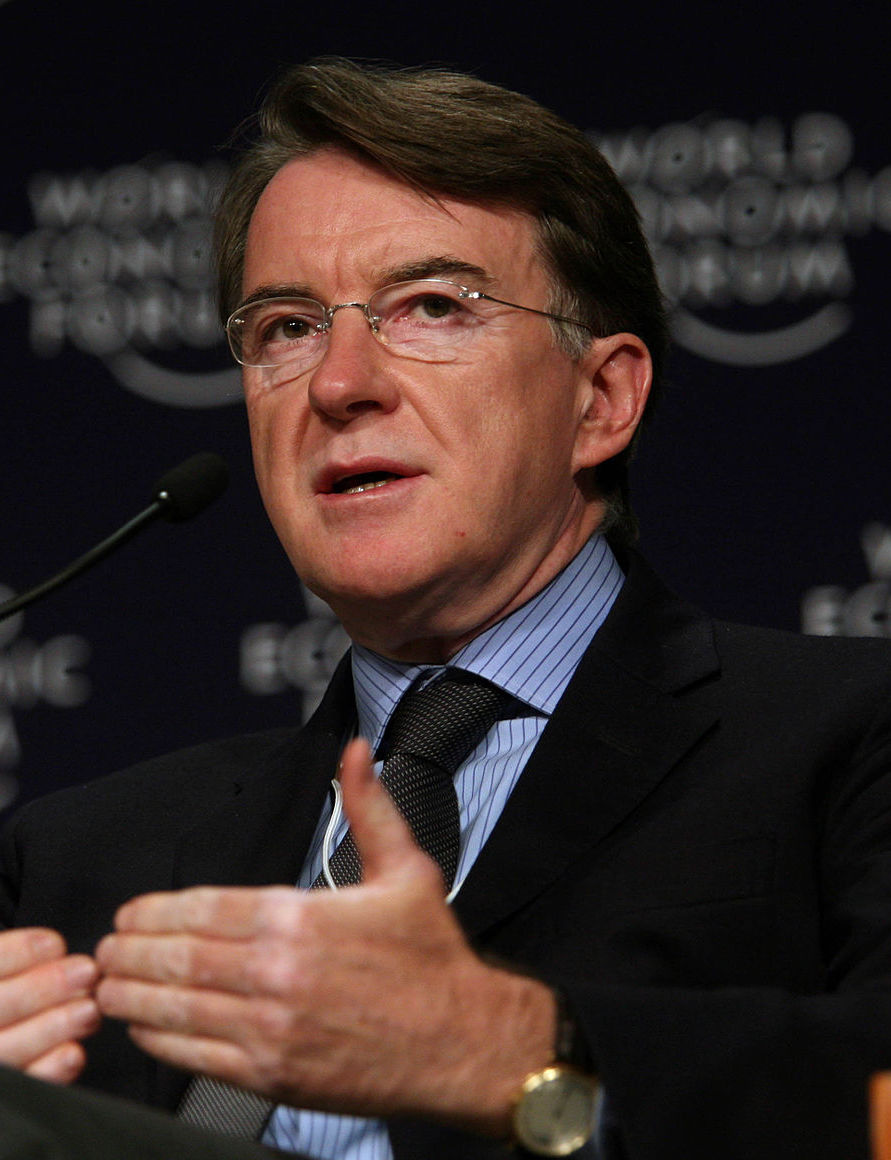
In December 2024, Starmer appointed Peter Mandelson to serve as British ambassador to the United States. Starmer dismissed Mandelson in September 2025 over his association with Jeffrey Epstein. In February 2026, during Prime Minister’s Questions, Starmer said that Mandelson had ‘lied repeatedly’ during vetting about his long-term relationship with Epstein. Starmer said he regretted the appointment and announced that, with the King’s agreement, Mandelson had been removed from the Privy Council for bringing it into disrepute. The Mandelson scandal led to the resignation of Starmer’s Chief of Staff, Morgan McSweeney on 8 February as well as his Director of Communications, Tim Allan on 9 February 2026. Hours after Allan announced his resignation, Scottish Labour leader Anas Sarwar called for Starmer to resign but his cabinet ministers voiced their support for him to remain at the helm.
Labour has a majority, and the next election can be held up to but no later than 15 August 2029.
The problem is that after the local elections Starmer was (politically speaking) a dead man walking. His party rightfully sees this as an indication of their fortunes in the next national if they stay the course. The problem, and here’s where things start to get wild, Labour is so uninspiring that they have no one to replace Starmer so he remains at the helm for lack of options.
Angela Rayner, David Lammy, Shabana Mahmood, and Ed Miliband are names that have been names kicking around for a replacement. Wes Streeting (minister of Health) resigned last month saying he no longer had confidence in Starmer’s leadership and attempted to launch a leadership contest but clearly lacked the required 81 nominations from sitting Labour MPs in order to kickstart a leadership race himself. Which is to say he has no chance.
In walks Andy Burnham.

Andy Burnham came up in the Tony Blair Government eventually becoming a cabinet minister. He also held significant role on the opposition benches. Being from the north and a senior member of the party he was pretty significant. He subsequently ran twice for the U.K. Labour Party leadership, in 2010 and 2015. Both times he lost. He jumped ship as the party swung dramatically left under socialist Jeremy Corbyn. From there he went on to become Mayor of Manchester.
He gets a lot of credit for the fact that Greater Manchester is now the fastest-growing city region in the country. Precisely how much of Manchester’s success is actually down to Burnham is a matter of debate. And there has been criticism too, over local policing, a lack of affordable housing, an uptick in homelessness. But as the figurehead of the city’s gleaming, high-rise revival, Burnham has bathed in its glory.
He does have a narrative of being the fighter who made the (minor) political achievement of reforming public transit which has been painted as a David vs. Goliath story of Burnham versus the private bus companies and Thatcher legacy which he took all the way to the High Court to defeat.
He has now stepped up to run in Makerfield (about 20 miles west of Manchester) after the area’s former MP Josh Simons quit last month to offer him a fast-track route to Westminster. He has made plain his intention is to immediately launch a leadership challenge and with no other serious challengers he will certainly win.
On the surface polling in Makerfield suggests Burnham has opened up a commanding lead over his Reform UK opponent, Robert Kenyon, a local plumber whose campaign has been damaged by sexist comments he made in the past. However it’s not that simple…. These same northern regions propelled Britain out of the EU in the Brexit referendum. If you look at the Manchester area and Makerfield in particular, you see Andy signs on the high streets but in the local council estates and low-income areas it’s all reform, so this is not a cut and dry win – especially when this one small by-election is essentially an election for the UK’s next Prime Minister.
Initially holding a commanding lead, the polls are now narrowing.
Every party has been out in force in Makerfield. This includes Keir Starmer himself, there have been rumours he planned to announce a social media ban for youth under 16 the day before the election. These rumours were off by a couple days and as the PM announced it yesterday. The roll out is meant to send the message and should stay in Number Ten.
The election is Thursday (the day after tomorrow).
In what I see as connected with the Makerfield by-election, early Sunday, Royal Marines seized a Russian shadow oil tanker in the Channel. No doubt Starmer sees this as a demonstration of strength on security after the resignations of his defence and armed forces ministers, which I will get to in a moment.
The thrust here is that there is a real possibility (more than Labour is willing to consider) that Burnham doesn’t win Makerfiled. At that point the question is what the hell Labour plans to do? Alternatively Burnham he does win there will be a by-election for Mayor of Manchester that Reform will, no doubt, aggressively peruse and stands a reasonable chance of succeeding.
Defence Investment Plan.
In the meantime, getting back to Starmer, this explains the sudden ‘appearance’ of the long awaited and (apparently) soon to be released Defence Investment Plan. This is something that has been held on the back burner since the autumn.

Starmer was immediately forced onto the backfoot to defend his much-criticized defence “plan” if you can call it that. For starters, days before a rumoured release on a Friday, which the Speaker of the House railed such a move in the House arguing it would be a disgraceful betrayal. John Healey, Minister of Defence meanwhile resigned over the plan, followed by the resignations of Armed Forces Minister Alister Carns and Healey’s PPSs Pamela Nash and Rachel Hopkins. It was not released after all, likely due not not having a Defence Minister, but it has now been promised before the upcoming NATO summit in Ankara.
Healey argued in his resignation letter that the £13.5 billion price tag will leave the U.K. less safe. He argues that Starmer’s plan won’t get them to 3% of GDP by 2030 and only hit 2.6%. He highlighted that since Starmer committed to a 10-year plan to transform the forces that Starmer has been unable and Treasury unwilling to commit the necessary resources. This raises another serious issue within the Starmer government, he can’t control his own treasury. This is a testament to the weakness of Starmer’s leadership and contributes to the idea that this a zombie government that can’t function.
Starmer wanted the DIP to be central focus moving forward to show Labour was serious about defence. Instead, the plan’s credibility is now in ruins, despite the efforts to pry billions from the Treasury. There is major budget mismanagement being revealed concerning defence from this efforts and even as Starmer talks tough of defence spending woes that have fractured his administration.
Something appears to have gone very wrong between the defence department agreeing a 3.6 percent budget increase in the 2025 spending review last June … It has now come out that six months later defence bosses apparently are said to have warned Starmer and Rachel Reeves about a massive £28 billion shortfall.

This demonstrates a couple things. The tension with treasury, the fact the DIP isn’t worth the paper it’s written on, that Starmer’s Government is unserious about defence, this is political theatre. And most of all it raises the question of how they are going to pay for it, which clearly, they don’t know the answer to.
One assertion that has been widely stated is that that Starmer can’t pay for defence without radically reforming welfare (1 in 10 are on it) which Starmer seems unwilling or unable to do. In connection with this, Starmer refused to rule out tax rises to pay for the plan to increase defence spending to 2.5% of GDP.
Ministers have been fighting about the subject for weeks, as Labour struggles to find the money needed. Starmer has also told government departments to trim their capital spending by 1%, and there is talk of steep cuts to the net zero and transport departments. A plan to refurbish dilapidated military homes could also be delayed. But these cost-cutting efforts may not free up enough cash. The point, Starmer has a massive problem inside his caucus.
On a side note, Britain is now in discussions about joining Carney’s new pet project, Canada’s NATO-linked defense bank.
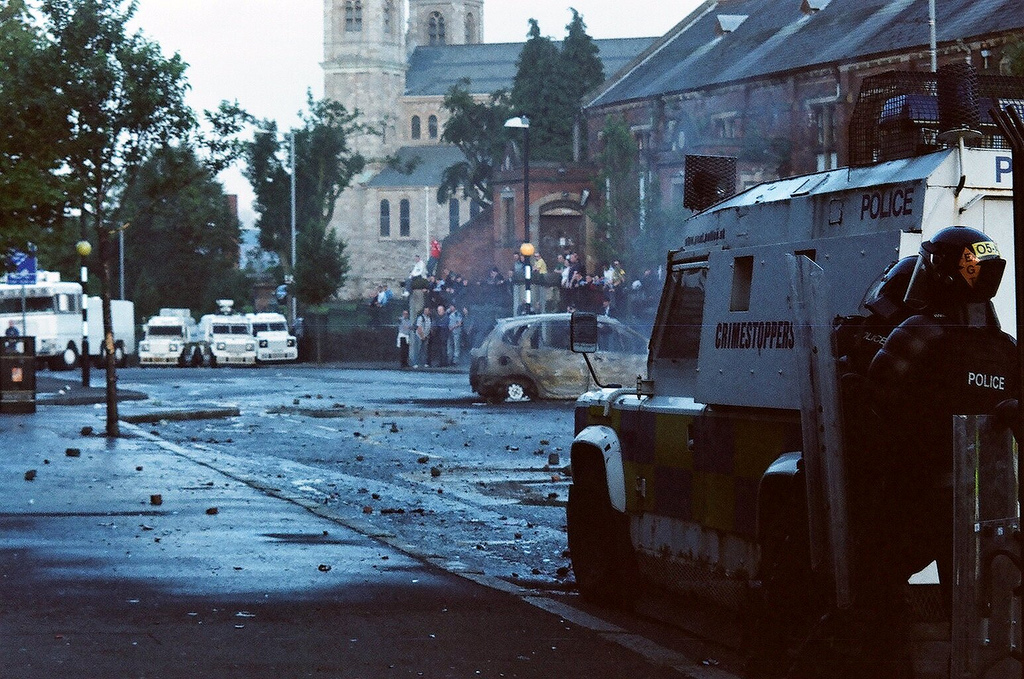
While this internal Labour Party drama plays out the Belfast is burning.
First, there was the release of the disgraceful video of police handcuffing a white stabbing victim laying on the ground bleeding while his Sikh assailant (who was known to police) stands by watching. Why? Because an allegation of racism was taken more seriously than someone telling an officer they had been stabbed. This was shockingly bad policing by any metric and those officers should face criminal charges.
Regardless, this fed into a long standing, and entirely justified critique of British policing having become a two-tier affair. There is overwhelming anecdotal video evidence of British police officers taking a harder line or not based on the colour of such a scale it feeds a brewing demand for a total overhaul of policing.
“Two-tier Kier” (as some have taken to call him), has become a focus of criticism for the current state of policing (despite it being larger than him) which is probably not helped by his time as the Head of the Crown Prosecution Service (CPS) and a legal career pursuing an activist agenda seen tied to the emergence of the current policing realities.
Were this not enough, within a week of this video becoming available there was an attack in Belfast where a migrant attempted to behead an Irish man Stephen Ogilvie in the street. He was saved by local citizens. Since then, things have predictably kicked off in Northern Ireland, which although among the least diverse areas of the UK is also deeply impoverished and feels (perhaps not without justification) that government funding and attention should go to them not to immigrants.
There were two nights of riots where migrant housing was burned, immigrant families driven from their home and armed men with balaclava setting up checkpoints on roads leading into Belfast. There are videos of cars and buses being set on fire. I saw one video of a flaming car being rolled into a building (presumably housing migrants).
Protestant Unionists and Catholic Nationalists are now working together which might be the most remarkable accomplishment of Starmer’s career!
Thus far a massive influx of police appears to have managed to get a hand on things, but I think it’s important to look at this as a prophecy of things to come.
- This will happen again
- Next time the scale might be larger than local police can handle
- Starmer’s Government can’t function in the best of circumstances, so I question its ability to respond to a real crisis
- If it happens again somewhere as politically delicate as Belfast, I question the ability of even a well-functioning government to respond in a way that doesn’t make the situation worse.
The reality is that the British electorate has been incredibly clear on immigration for over a decade (probably since the age of Tony Blair) and every government of every stripe has ignored the electorates will. Former British MP for the conservatives Andrew Percy was on the CBC the other day speaking with Ian Hanomansing and essentially said the same thing arguing that the main parties have ignored this often decrying it as racist and the voters have moved to more extreme parties as a result. This, by the way, will radicalize these people. As Percy said, mainstream parties need to be where the voters are.
Circling back around to Dr. David Betz at King’s and the idea that the UK could face a revolt/civil war within the next 5 years. I think that we should look at events in Belfast as a turning point marking the beginning of the UK slide toward a low-grade civil war (if it has not already). If things carry on (especially if Starmer stays at the helm – but even with Burnham and the political upheaval that will surely cause) I would not be surprised to see nationalist terror attacks or political assignations.
This has major consequences for Europe, for the Anglospehre, the Commonwealth, but most importantly NATO and global security. I don’t think the scale of the problem or the threat it represents is appreciated or given its due attention. Allied powers need to be getting involved in what is happening in the UK before it is too late.
The UK is a critical NATO centre for air and sea, HMNB Clyde in Scotland is home to the nuclear fleet. Which brings us to the point that the UK is a nuclear power. Those who remember the fall of the Soviet Union can appreciate the concerns that accompany that. Our biggest problems are at home and if you look at each of these events as part of the larger slide towards this breakdown a startling picture emerges.
The UK Government was weak before Starmer and will continue to be going forward. The UK has had five Prime Ministers in ten years, that is remarkable. That there was no real replacement for Starmer inside the party is damming. Regardless of whether Burnham wins Makerfield or not (I bet he loses) the deadlock will continue. This leaves the UK unable to respond to any internal or external pressure which, under the circumstances, is guaranteed to come along. In fact we are already seeing reports of Russian destabilization efforts in the UK which has already led to an arson attack targeting Starmer.
In its current state the UK is unable to adequately respond to such threats. Moreover, it’s incapable of meaningfully engaging with allies in confronting these issues. It finds itself increasingly on the sidelines for issues like Iran, Ukraine, and European security. This is unlikely to change anytime soon.
The problem no one seems to understand in government is that having put out the immediate fire doesn’t mean it’s gone, and you move on. These have a cumulative effect; they build on one another and unless/until the underlying issues are confronted things will continue to slide. That means confronting immigration in a reasonable way, reforming the welfare state which includes improving public services. It means creating jobs, lowering the cost of food and energy in the UK. It means reforming the police service, getting on top of defence – and most importantly doing all this with a weathered eye to the horizon – regaining public trust in the government and reestablishing its legitimacy in the eyes of the public. Without that the country will fall, full stop.
Feature Photo: Riot police and burnt out car in Ardoyne, Belfast, 8 August 2011. Wikimedia Commons, 2026.
Insert Photo: Peter Mandelson, British politician and European Trade Commissioner, at the World Economic Forum Annual Meeting of the New Champions in Tianjin, China. 27 September 2008 .Wikimedia Commons, 2026.
Insert Photo: First Minister John Swinney met with the Mayor of Manchester, Andy Burnham and the Mayor of Liverpool, Steve Rotheram at St Andrew’s House, Edinburgh. 13 August 2024. Wikimedia Commons, 2026.
Insert Photo: Defense Secretary of the United Kingdom John Healey first visit to DC July 2024, 29 October 2024.Wikimedia Commons, 2026.
Insert Photo: Official portrait of Minister for Veterans and People Alistair Carns OBE MC MP, 9 July 2024.Wikimedia Commons, 2026.
DefenceReport’s Analysis is a multi-format blog that is based on opinions, insights and dedicated research from DefRep editorial staff and writers. The analysis expressed here is the author’s own and is not necessarily reflective of any institutions or organisations which the author may be associated with.