



27 July 2026
On the 18th of July, Ukraine targeted two retail warehouses of the Russian company Wildberries. It signalled a marked shift in Ukraine’s usual drone and missile targets. Before that, Ukraine targeted military logistical hubs, factories that provided critical components to Russia’s war economy, and Russia’s energy infrastructure to curb Russia’s export of fossil fuels and the consumption of those for domestic use in a bid to cripple Russia’s economy.
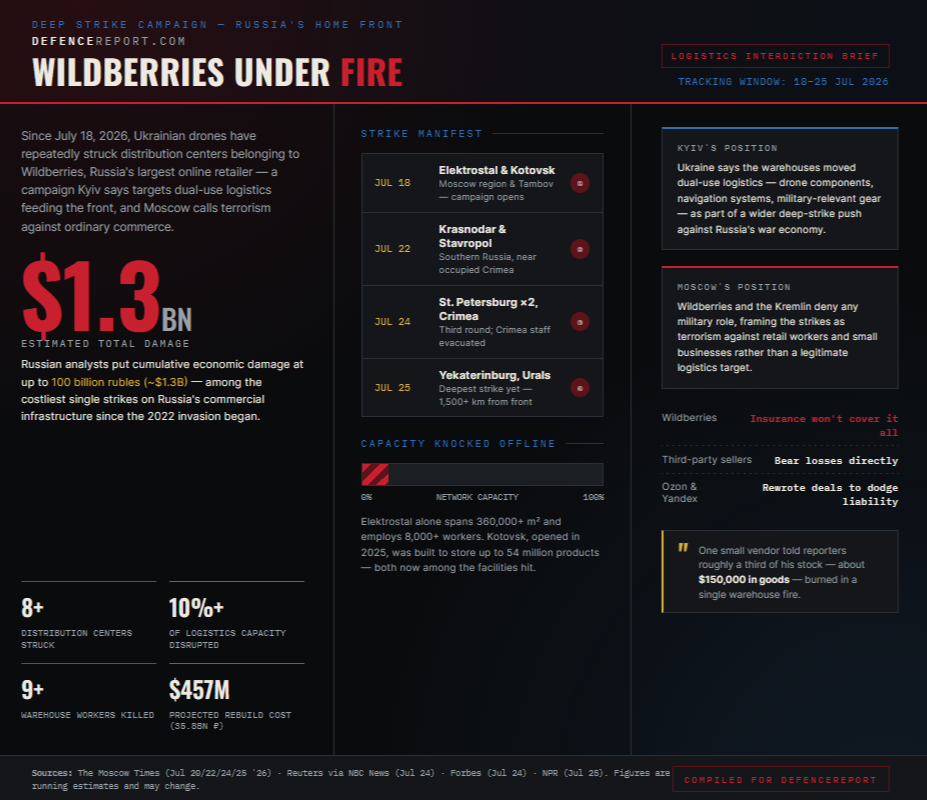
Since then, Ukraine has continued targeting Wildberries’ warehouses. Wildberries has often been described as Russia’s Amazon. At the time of writing this, eight warehouses have been hit, accounting for 10% of the company’s total logistical capacity.
As the Russian economy declines, Russians have moved towards online shopping like Wildberries and its rival Ozon. It is estimated that 85-90% of Russia’s economically active population. Russians in remote areas will also feel the brunt of these attacks as they rely on online retailers, as they do not have the abundance of brick-and-mortar shops.

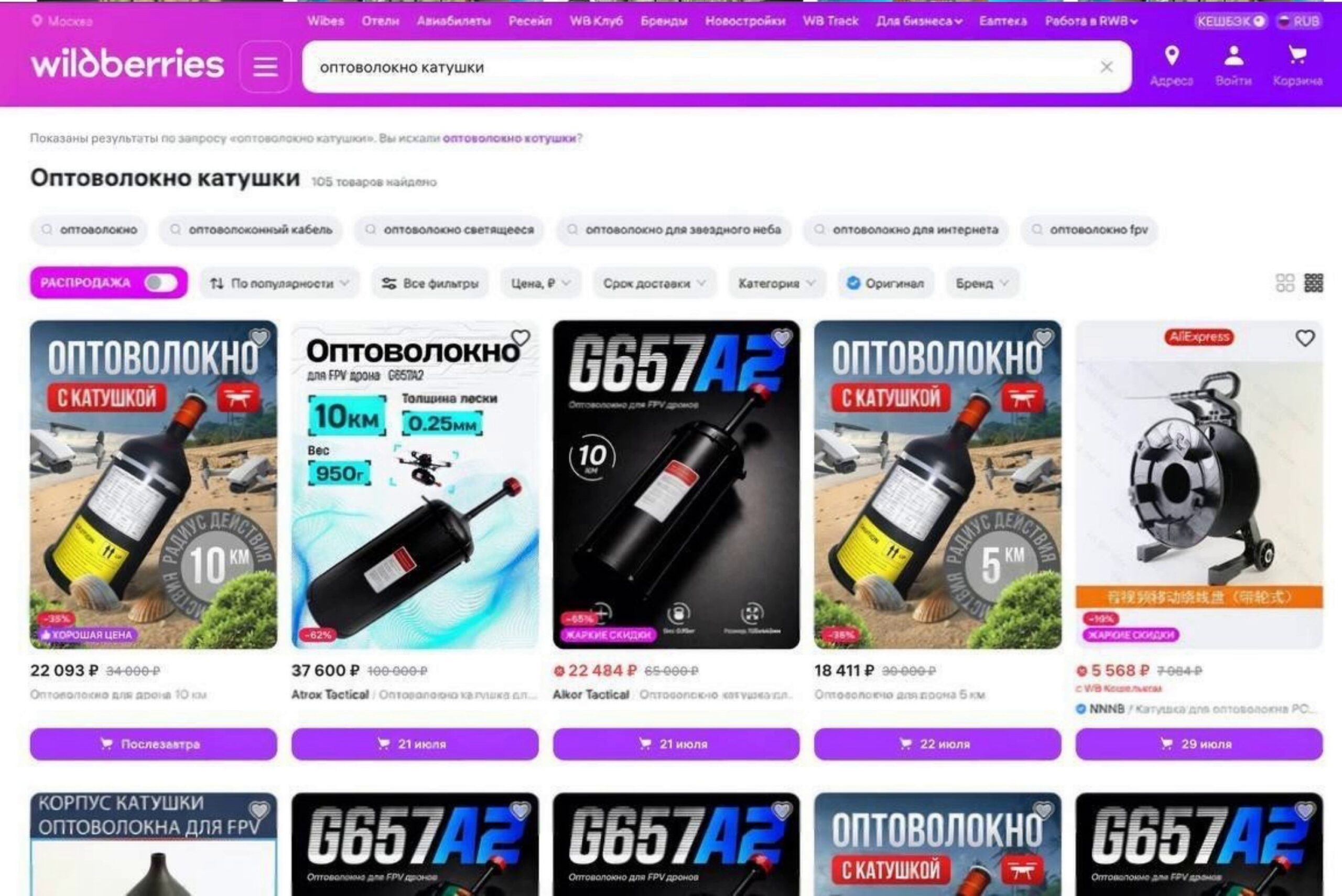
The Ukrainian position is that Wildberries facilities because they are selling body armour, fibre-optic spools, drone components, and other equipment. It is believed that Russian troops are offsetting their poor equipment by placing orders through Wildberries. Therefore, by providing military equipment assistance, the Wildberries warehouses are legitimate targets according to the Ukrainians. Wildberries recently hid the military-use goods that the Ukrainians have alleged from its store. It should be noted that Wildberries’ rival Ozon has not been targeted in Ukrainian strikes. Ozon has not been implicated in selling dual-use or blatant military equipment on its site.
There is a slew of Russian small- and medium-sized businesses that have lost their inventories. Obviously, retailers that are providing goods that are not linked to Russia’s war effort, but clothes and other civilian goods. The warehouse outside St. Petersburg, which was hit on 24 July, had an estimated inventory value of 10 billion to 12 billion rubles($128 million to $153 million USD). Depending on the stock-level capacities of the various warehouses hit, the Ukrainian strikes could have inflicted 100 billion to 250 billion rubles ($1.28 billion to $3.20 billion USD) in immediate financial damage on Wildberries and various third-party sellers.
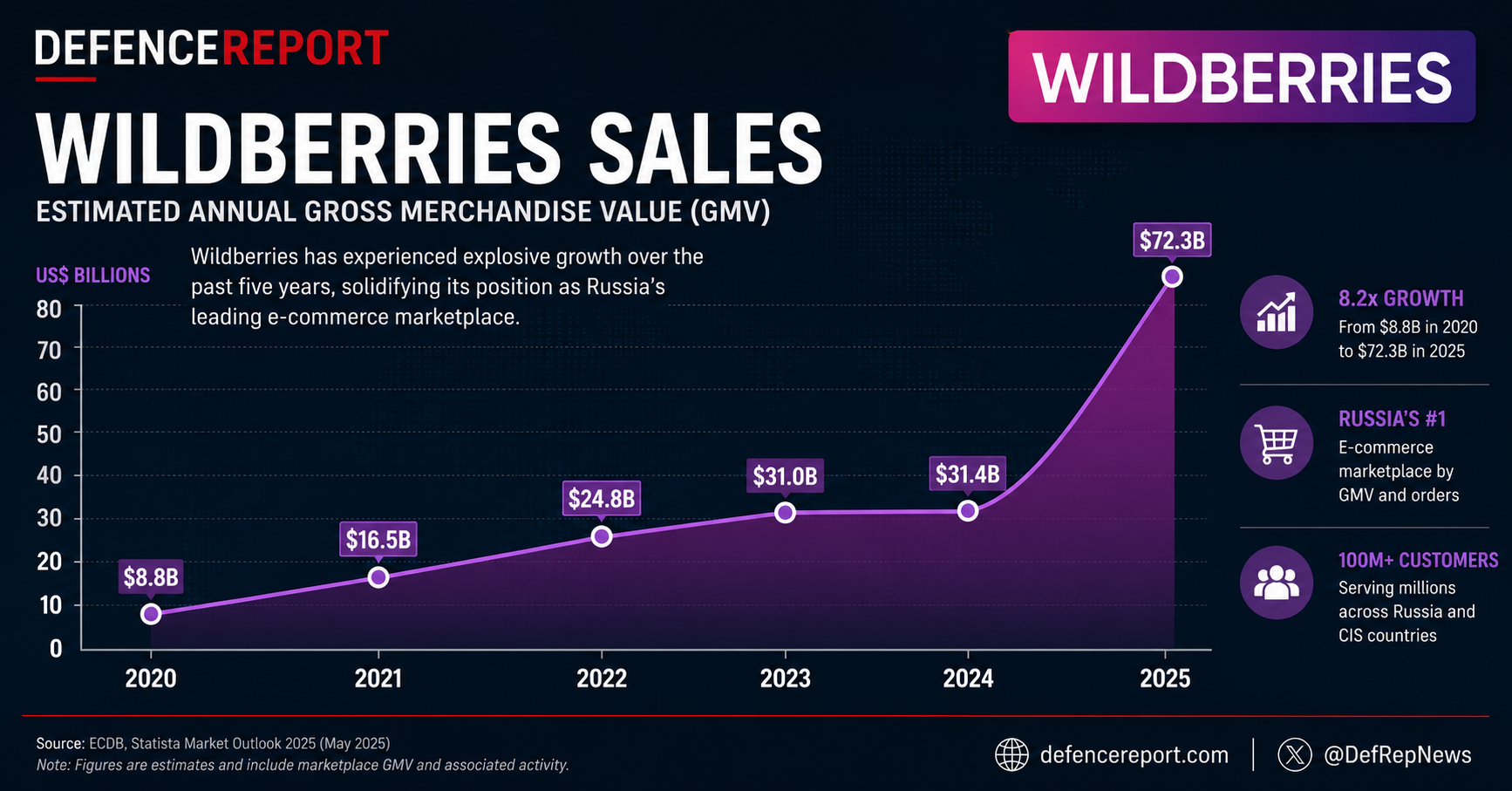
This is another reason why Ukraine is striking Wildberries, because of the reliance that the Russian people have on its online retailers for providing stable prices in real time. Ukraine’s “long-range sanctions” have been attempting to destabilize the Russian economy. There have been fuel restrictions throughout Russia, and Russia imposed a gas export ban until the end of 2026.
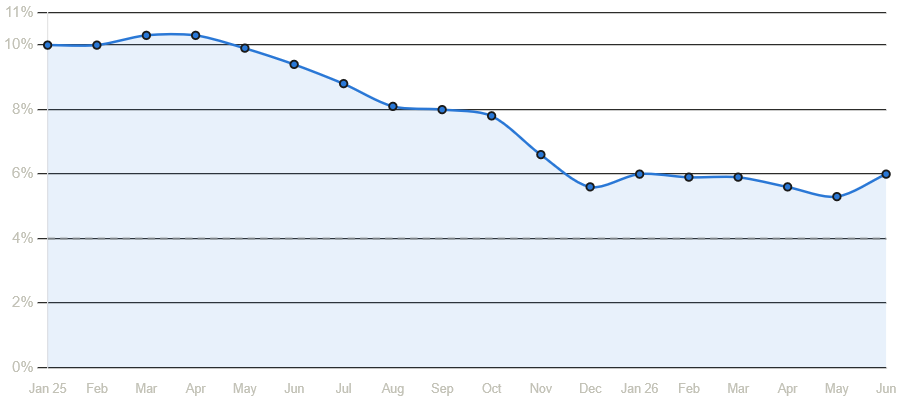
Russian civilians rely more on online retailers than on traditional brick-and-mortar stores. Despite the attacks on Russian energy infrastructure over the past year, Russian inflation has decreased to approximately 6%. The Central Russian Bank aims to keep inflation at 4% or lower.
Attacks on Russian online retailers will increase prices, as Wildberries and third-party sellers attempt to recoup the inordinate losses they have incurred. Putting a further strain on the Russian people and the economy. Russian insurers will be unlikely to cover the costs of the attacks. Wildberries announced that it will freeze loan repayments to small- and medium-sized businesses whose inventory was destroyed in the recent attacks. There are reports that Wildberries owes 1.3 trillion rubles (17.6 billion USD) – these estimates have been published in Ukrainian media and are not verified. If true, it does signal how Russian businesses are incurring more debt to ensure that the greater economy stays afloat, which is something that Ukrainian intelligence illustrated.
Aside from the possibility of a large, overbearing debt load, Wildberries will not be able to sustain lower delivery costs due to the extent of Ukraine’s attacks and will probably also increase the prices of goods on its site. Its costs have increased as warehouses have been destroyed, forcing reliance on warehouses farther away; fuel prices have soared, and the company now needs to recoup roubles for the damages it has incurred.
Therefore, it will hit the average Russian citizen and will most likely increase the inflationary rate in the Russian economy. For years, many have speculated when the Russian economy will collapse — targeting Russia’s robust online retail sector is just another aim to do so, with the added benefit of impeding the supply of Russian troops on the front lines.
It was interesting to see that the first Ukrainian strike on the Wildberries warehouses also coincided with the European Union imposing a €550 million (629 million USD) fine on the Chinese company AliExpress. The EU fine was imposed due to AliExpress’s failure to tackle the sale of illegal, unsafe, and counterfeit products on its platform. This fine was not due to AliExpress’s assistance in the sale of goods to the Russian military.
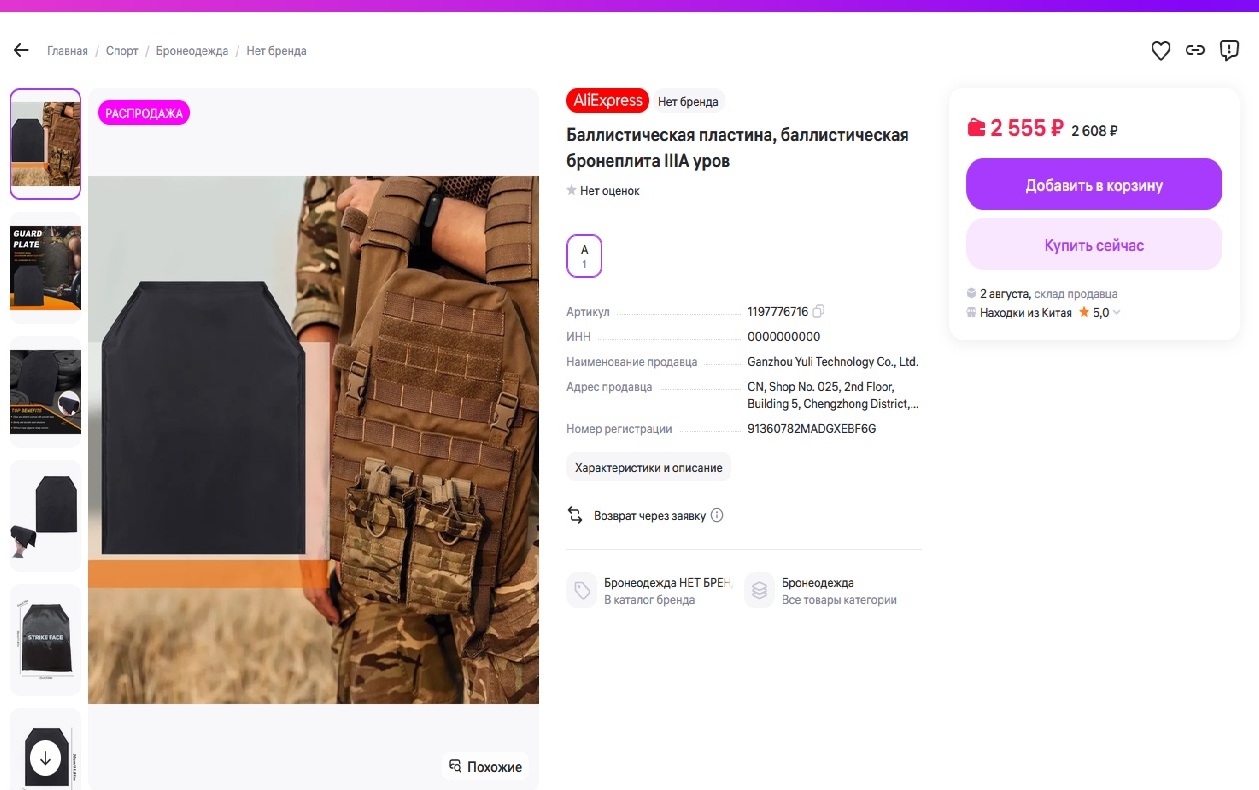
However, with a search on the Wildberries site, one can find body armour options sold by AliExpress as a third-party retailer. Wildberries, like many online stores, does sell goods of third-party businesses.
Wildberries operates more than 200 logistics warehouses and facilities in Russia and in neighbouring countries. Targeting those in dense urban areas will hit the overall network harder, as they tend to have more inventory options for the surrounding populace and are in high-traffic transit hubs to permit goods to arrive and enter inventory.
Ukraine’s attacks on the Wildberries facilities are not just about the transfer of body armour and other military-use goods, but also an extension of the energy infrastructure attacks on Russia. It limits the tax that the government can extract, but also adds limitations and increases costs on the Russian people and the greater economy as a whole. If Wildberries cannot continue with its financial liabilities, it will send shockwaves throughout the Russian economy.
Feature Photo: “AI-generated image of Ukrainian strike on Wildberries”, 2026