
4 June 2026
CANSEC comes at the end of May every year, but this one was very different from previous ones. The event is held by the Canadian Association for Defence and Security Industries (CADS), of which DefenceReport is a proud member. Attendance was astronomical, with over 20,000 people on the first day and approximately 300 vendors. Last year, approximately 14,500 people attended on the first day. Attendance drops on the second day, so it is easier to connect with old contacts and friends, and make new ones.
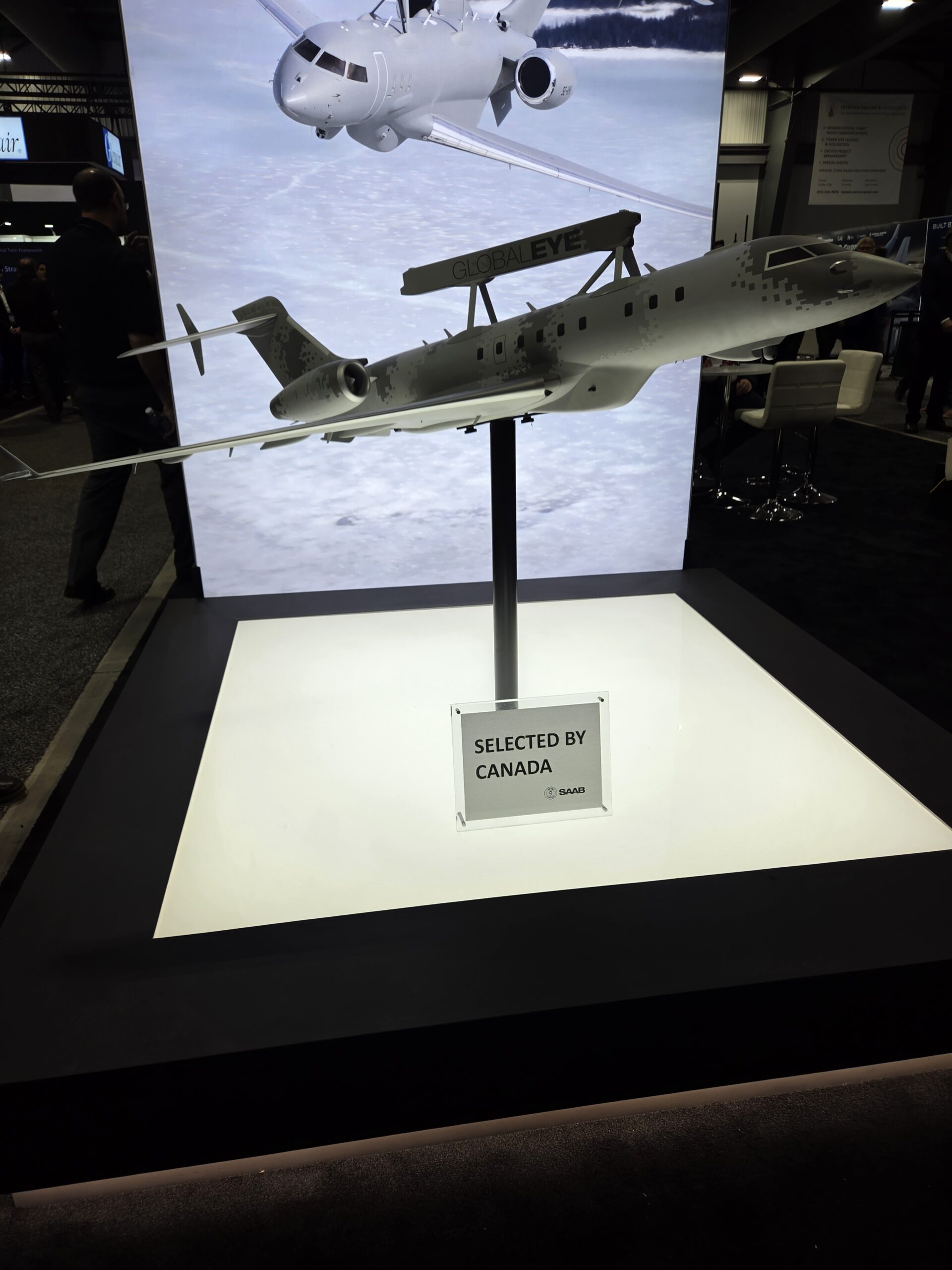
Prime Minister Mark Carney made a surprise breakfast visit and announced that Canada would negotiate with Saab for Canada’s new AWACS. A surprise visit is a loose definition, as it was well-rumoured and discussed at various pre-CANSEC receptions the day before. It was a big moment. Obviously, it was a signal that Canada would seek to purchase equipment originating from Europe and Canada, as Saab’s GlobalEye is based on the Bombardier 6700.
There was a different air at CANSEC as well. Many would openly express their excitement at the Canadian government’s serious interest in the Canadian Armed Forces and the Canadian defence industry. However, many of those would also privately disclose that they were not entirely optimistic about the surge.
Reinvesting in the Canadian Armed Forces will take decades – new ships, new tanks, new aircraft, and everything else – including uniforms, sleeping bags, and everything in between.
Small and Medium Enterprises (SMEs) are the backbone of any manufacturing endeavour, and even more so in the defence industry. Approximately 86% of the Canadian defence industrial base is SMEs. There was much optimism that SMEs would be able to showcase the strength of Canadian industry. CADSI used to have an SME Day, which “would provide a small/medium business lens to government policy.” After CANSEC, there were calls on LinkedIn to bring back SME Day.
But things are never what they appear to be in Ottawa. Again, some of those conversations went into trepidation. Concerns about whether SMEs would be able to handle increased production without increased investment became apparent. Other concerns also arose in those conversations, mostly about the Canadian government’s lasting commitment to defence spending, and that of our allies.
There is a commitment to revitalizing NATO’s militaries. But for how long? Will the hype continue after Trump’s final term ends in 2028? Can Russia remain a threat in 2028? Many of our European allies are preparing for a possible confrontation with Russia in the years to come. But what if Russia in 2028 also looks much different? Ukraine is regaining some territory, but its drones are targeting deep within Russia and behind the front lines. Ukraine aims to kill 50,000 Russian soldiers a month and is killing upwards of 35,000, which is degrading Russia’s ability to muster any offensive.
Canada has not had a proper defence white paper since the 1990s, and there has been no foreign policy paper to outline where Canada is in the world and the threats that we face. It is difficult to base defence and foreign policy without a detailed report that outlines the threats that we face.
Government priorities can, and do, shift. When we are discussing an increase in defence spending, we are also discussing a commitment to Canada’s defence industrial economy. If there is trepidation about investing in facility expansion, then supply chains need to adjust, which means a part may not be Canadian; it may come from Europe or the United States. Then that raises concerns about the International Traffic in Arms Regulations (ITAR). It is a set of US government rules governing the import and export of defence-related equipment, services, and technical data. The US can veto US systems or components in larger equipment that we buy.
Then comes another concern from this that further disparaged me. What about the first defence procurement controversy? The government is developing innovative solutions through the Defence Investment Agency. Carney is an Anglophile, and he should have watched the Yes, Prime Minister series.
Courageous decisions may lose the next election, but how will defence procurement continue? Will the train just have a bump along the track or will the whole thing derail?
There are obvious concerns within Canada’s defence industry. Well-founded ones too.
I always enjoy my time in Ottawa for CANSEC. However, it is a whirlwind of meetings outside CANSEC, the intensity of CANSEC for two days, and then wrap up meetings and back home to BC.
For all of those whom I saw and talked to, see you next year! Those whom I did not have a chance to see– see you next year. Regardless, reach out to me in between.